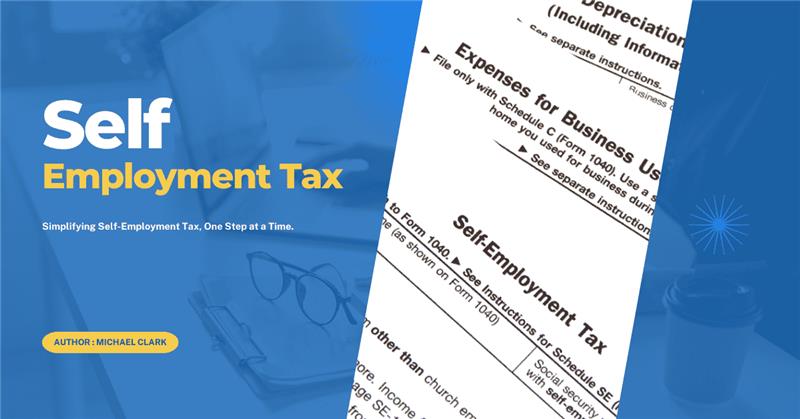
What Is Self Employment Tax? How it is calculated
Self employment tax is the tax self-employed individuals pay to cover Social Security and Medicare, and it’s calculated at 15.3% of your net earnings. If you work for yourself, you’re responsible for both the employee and employer portions of these taxes.
If you’re freelancing, running a small business, or earning money on the side, understanding self employment tax early can save you from surprises, penalties, and stress later.
What Is Self Employment Tax?
Self employment tax is how self-employed individuals contribute to Social Security and Medicare. When you work a regular job, your employer splits these taxes with you. But when you work for yourself, you pay both halves, which is why the rate looks higher.
The current self employment tax rate is 15.3%, broken down as:
-
12.4% for Social Security
-
2.9% for Medicare
If your income is high enough, you may also owe an additional 0.9% Medicare tax, which we’ll explain shortly.
Check here: Best accounting and bookkeeping services in tampa, FL, US
Who Has to Pay Self Employment Tax?
You must pay self employment tax if you earn $400 or more in net self-employment income during the year.
This applies to:
-
Freelancers and independent contractors
-
Gig workers (Uber, DoorDash, Instacart, etc.)
-
Sole proprietors
-
Small business owners
-
Partners in a partnership
Even if your self-employment income is a side hustle, the IRS still considers it taxable.
You can Ask Questions here directly about CPA & CFP
How Is Self Employment Tax Calculated?

You don’t pay self employment tax on your total income. You pay it on your net earnings, which is your income after deducting business expenses.
Here’s how the calculation works:
-
Start with your net profit
-
Multiply it by 92.35% (IRS adjustment)
-
Apply the 15.3% tax rate
Example
You earn $60,000 from freelancing and have $10,000 in business expenses.
-
Net earnings: $50,000
-
Taxable portion: $50,000 × 92.35% = $46,175
-
Self employment tax: $46,175 × 15.3% = $7,065.78
That’s your self employment tax for the year.
Additional Medicare Tax for High Earners
If your income exceeds certain thresholds, you may owe an extra 0.9% Medicare tax. This only applies to income above the threshold, not your entire earnings.
|
Filing Status |
Income Threshold |
|
Single |
$200,000 |
|
Head of household |
$200,000 |
|
Married filing jointly |
$250,000 |
|
Married filing separately |
$125,000 |
|
Qualifying surviving spouse |
$200,000 |
This additional tax applies only to Medicare, not Social Security.
Can You Deduct Self Employment Tax?
Yes. You can deduct half of your self employment tax when calculating your adjusted gross income (AGI). This doesn’t reduce the self employment tax itself, but it lowers your taxable income, which reduces your income tax.
Using the earlier example:
-
Self employment tax: $7,065
-
Deductible portion: $3,532.89
This deduction is the IRS’s way of treating self-employed individuals similarly to employers.
When and How Do You Pay Self Employment Tax?
If you expect to owe $1,000 or more in taxes for the year, you must make quarterly estimated tax payments.
These payments are due:
-
April 15
-
June 15
-
September 15
-
January 15 (following year)
You can pay online using IRS Direct Pay or EFTPS. Paying quarterly helps you avoid penalties and a large tax bill at year-end.
How Do You Report Self Employment Tax?
You’ll use these IRS forms:
-
Schedule C – reports income and expenses
-
Schedule SE – calculates self employment tax
-
Form 1040 – your main tax return
For most freelancers and gig workers, these forms are all that’s needed.
What Counts as a Business Expense?
Business expenses reduce your net income, which means less self employment tax.
Common deductible expenses include:
-
Office supplies and equipment
-
Computer, phone, and software used for work
-
Internet and phone bills (business portion)
-
Advertising and marketing
-
Business travel and mileage
-
Home office expenses (if eligible)
To qualify, expenses must be ordinary and necessary for your business. Keeping clean records makes tax filing much easier.
How Much Should You Set Aside for Self Employment Tax?
A safe rule of thumb is to set aside 25% to 30% of every payment you receive. This usually covers both income tax and self employment tax. Setting aside money as you earn it helps prevent cash-flow problems when quarterly payments are due.
Common Self Employment Tax Mistakes to Avoid
Many self-employed taxpayers get caught off guard by:
-
Not making quarterly payments
-
Forgetting to track expenses
-
Mixing personal and business finances
-
Underestimating how much tax they owe
-
Waiting until tax season to plan
Avoiding these mistakes can save you money and stress.
What If You Have a W-2 Job and Self-Employment Income?
If you work a regular job and freelance on the side:
-
Your employer handles payroll taxes for your W-2 job
-
You pay self employment tax only on your freelance income
Be careful though combined income can push you into a higher tax bracket, making planning even more important.
Self Employment Tax and Retirement Benefits
Paying self employment tax helps you qualify for Social Security and Medicare later in life.
In 2026, earning about $1,890 gets you one Social Security credit. You can earn up to 4 credits per year and need 40 credits to qualify for retirement benefits. Skipping or underreporting income can reduce your future benefits.
Need Help With Self Employment Tax?
SK Financial CPA has over 24 years of experience helping self-employed professionals and small business owners handle their taxes correctly. From calculating self employment tax to managing quarterly payments, their team simplifies the process so you can focus on growing your business.
Conclusion
Self employment tax is difficult at first, but once you understand how it works, it becomes manageable. The key is knowing what you owe, planning ahead, and staying organised. Being self-employed gives you freedom but understanding your tax responsibilities gives you control.
FAQs
Do I have to pay self employment tax if I made very little money?
Yes. If your net self-employment income is $400 or more for the year, you’re required to pay self employment tax, even if it was just a side hustle or part-time work.
Is self employment tax separate from income tax?
Yes. Self employment tax covers Social Security and Medicare, while income tax is based on your tax bracket. As a self-employed person, you usually pay both.
Can I avoid self employment tax by forming an LLC?
No. Simply forming an LLC does not eliminate self employment tax. Most single-member LLCs are still taxed as sole proprietors unless they elect a different tax structure, such as an S corporation.
Do I pay self employment tax on gross income or profit?
You pay self employment tax on your net profit, which means your income after deducting business expenses, not your total earnings.
What happens if I don’t pay quarterly self employment taxes?
You may face penalties and interest, even if you pay the full amount when filing your return. The IRS expects taxes to be paid throughout the year as income is earned.
Can business expenses really lower my self employment tax?
Yes. Every legitimate business expense reduces your net income, which directly lowers the amount of self employment tax you owe. Proper expense tracking can make a significant difference.
Does self employment tax affect my Social Security benefits?
Yes. Paying self employment tax helps you earn Social Security credits, which count toward retirement and Medicare eligibility later in life.
If I have a W-2 job, do I still owe self employment tax?
Yes, but only on your self-employment income. Your employer already handles payroll taxes for your W-2 wages.
Is self employment tax the same every year?
The rate stays mostly the same, but income limits, thresholds, and Social Security wage caps can change yearly. That’s why it’s important to stay updated.
Follow SKFinancial on Facebook / Twitter / Linkedin / Youtube for updates.