CPA vs an Accountant: Who Is Better for Your Taxes?
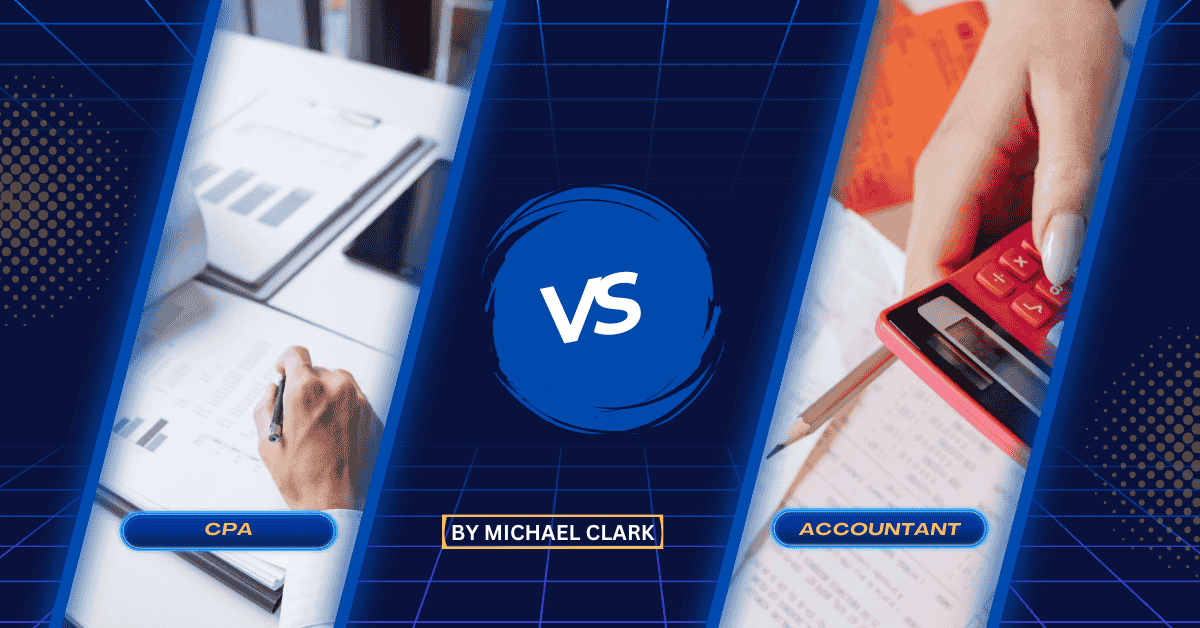
A CPA is a licensed accounting professional who can represent you before the IRS, while an accountant focuses on recording and organizing financial information. If taxes, audits, or compliance matter in your situation, a CPA offers more protection than an accountant.
Most people searching CPA vs accountant are not choosing a career. They are trying to decide who they should trust with their finances.
What Is a CPA?
A CPA, or Certified Public Accountant, is an accountant who holds a state license after meeting strict education, exam, and experience requirements.
To become a CPA in the US, a professional must:
-
Complete at least 150 college credit hours
-
Pass the Uniform CPA Examination
-
Meet state work experience requirements
-
Complete continuing education every year
A CPA can legally prepare and sign tax returns, give tax advice, and represent clients before the Internal Revenue Service. This legal authority is the biggest reason people choose a CPA.
Check here: Best accounting and bookkeeping services in tampa, FL, US
What Is an Accountant?
An accountant is a professional trained to manage and organize financial data. Most accountants hold a bachelor’s degree in accounting and focus on daily financial tasks.
Accountants commonly handle:
-
Bookkeeping and transaction recording
-
Bank and credit card reconciliations
-
Payroll support
-
Expense tracking
-
Internal financial reports
An accountant can prepare tax returns, but they cannot represent you in an IRS audit or legally defend your return.
You can Ask Questions here directly about CPA & CFP
Is a CPA the Same as an Accountant?
No. All CPAs are accountants, but not all accountants are CPAs. The difference comes down to licensing, authority, and accountability.
According to data from the Bureau of Labor Statistics and CPA licensure reports, only about 50% of accountants in the United States actively hold a CPA license. That smaller group carries higher responsibility and stricter oversight.
If a CPA violates professional rules, they can lose their license. An unlicensed accountant does not face the same consequences.
What Are the Responsibilities of a CPA vs an Accountant?

Accountants and CPAs often work together, but their responsibilities are not equal.
An accountant typically handles:
-
Recording income and expenses
-
Reconciling bank and credit card accounts
-
Managing accounts payable and receivable
-
Preparing internal financial reports
-
Supporting payroll and budgeting
These services keep businesses organized and running smoothly.
A CPA does all of the above, but also handles work that requires licensing and professional authority.
A CPA can:
-
Prepare and sign tax returns
-
Create tax strategies before year end
-
Represent clients before the Internal Revenue Service
-
Respond to audits and IRS notices
-
Structure businesses for tax efficiency
-
Prepare reviewed or audited financial statements
That difference becomes critical when something goes wrong or when planning ahead can save real money.
Why Are CPAs Held to Higher Standards?
CPAs are licensed and regulated at the state level.
They must:
-
Follow professional codes of conduct
-
Act with integrity and objectivity
-
Complete annual continuing education
-
Stay current with tax law changes
Because of this oversight, courts and government agencies recognize CPAs as qualified tax and accounting experts.
Do I Need a CPA or an Accountant to File My Taxes?

Many people ask if an accountant can file taxes. The answer is yes. The better question is who can protect you if there is a problem. An accountant can prepare a return. A CPA can defend it. If the IRS sends a notice, questions a deduction, or starts an audit, only a CPA or attorney can represent you directly.
This is one of the most important differences in the CPA vs accountant comparison. For anyone with business income, rental property, multiple income sources, or prior tax issues, this protection matters.
Who Usually Earns More, a CPA or an Accountant?
CPAs usually earn more than accountants because they hold a license and carry legal responsibility. To become a CPA, a professional must complete extra education, pass a national exam, and meet experience requirements. That effort opens the door to higher-level work.
Because of this, CPAs often charge more for their services. For many clients, the added cost is worth it because good tax planning and fewer mistakes often save more money than the fee itself.
Will CPAs or Accountants Be in Higher Demand?
Both CPAs and accountants will remain in demand as tax rules continue to change.
The U.S. Bureau of Labor Statistics projects about 6% growth for accounting and auditing jobs over the next decade. CPAs see stronger demand when work involves higher responsibility.
Businesses most often rely on CPAs for:
-
Tax planning and compliance
-
IRS audits and notices
-
Financial reviews and advisory work
Clients choose CPAs because they trust licensed professionals when mistakes can cost money.
How Do CPA and Accountant Career Paths Differ?
Accountants usually work inside one business and focus on daily financial tasks and reporting. CPAs often work with multiple clients across different industries or in advisory roles. They handle more complex financial decisions and planning.
CPAs commonly specialize in areas such as:
-
Tax planning and compliance
-
Business advisory services
-
Forensic accounting
-
Business valuation
-
Financial planning
When Is an Accountant Enough?
An accountant is enough when your financial situation stays simple. Hiring an accountant makes sense if:
-
You only need bookkeeping and record keeping
-
Your income comes from one or two basic sources
-
A CPA already handles your tax filing
-
You want to keep ongoing costs lower
Accountants play an important role in daily operations. Problems start when people expect accountants to handle work that requires a CPA license.
When You Should Choose a CPA Instead?
A CPA is the better choice when:
-
You own a business
-
You want proactive tax planning
-
You received an IRS letter
-
You are behind on filings
-
You want advice, not just reports
Most people upgrade to a CPA after a problem appears. Working with a CPA earlier often prevents those problems entirely.
How Does SK Financial CPA Help Clients?
We help clients understand whether they need an accountant, a CPA, or both. We do not upsell services you do not need. We review your situation, explain the risks clearly, and recommend the level of support that makes sense.
Some clients only need bookkeeping. Others need full CPA oversight and tax planning. Our role is to keep you compliant, informed, and prepared.
Conclusion
CPA vs accountant is not about which role is better. It is about which one protects you in your situation. An accountant keeps your books organized. A CPA protects you when taxes, regulations, or the IRS are involved.
If your finances are simple, an accountant may be enough. If your financial life has complexity or risk, a CPA gives you clarity, authority, and peace of mind.
That is the difference clients usually understand only after experiencing both.
FAQs
Can an accountant represent me if the IRS contacts me?
No. An accountant can prepare your return, but only a CPA or tax attorney can legally speak to the IRS and handle audits or notices for you.
Do I need a CPA if my taxes are simple?
If you have one job and no deductions beyond the basics, an accountant may be enough. Once income sources grow or change, a CPA becomes more important.
Is a CPA only needed for businesses?
No. Individuals with investments, rental income, or tax notices often need a CPA just as much as business owners.
Why does a CPA charge more than an accountant?
A CPA carries licensing responsibility, ongoing education requirements, and legal authority, which increases both accountability and cost.
Can I switch from an accountant to a CPA mid-year?
Yes. A CPA can review your records at any point and step in before filing deadlines or IRS action.
Will a CPA reduce my tax bill more than an accountant?
Often yes. A CPA focuses on tax planning, not just filing, which helps reduce taxes legally before problems appear.
Can an accountant give tax advice?
An accountant can explain numbers, but a CPA can legally advise on tax strategy, deductions, and compliance decisions.
Do I still need bookkeeping if I hire a CPA?
Yes. Clean bookkeeping supports accurate tax planning. Many clients use bookkeeping with CPA oversight.
What happens if my return has mistakes?
If errors lead to penalties or audits, a CPA can represent you and correct the issue. An accountant usually cannot.
How do I know when it is time to hire a CPA?
If taxes feel confusing, your income increases, or the IRS sends letters, it is usually time.
Follow SKFinancial on Facebook / Twitter / Linkedin / Youtube for updates.