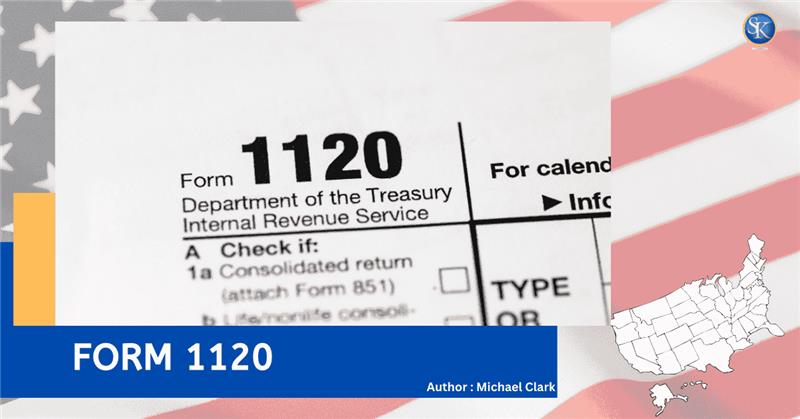
Form 1120, U.S. Corporation Income Tax Return
If your business is a C corporation, Form 1120 is the tax return you must file every year to report income, deductions, and corporate taxes owed. It’s how the IRS calculates your company’s 21% federal tax. Even if your corporation made no money, you’re still required to file. Missing it can lead to penalties, interest, and unnecessary stress so understanding this form is part of running a corporation responsibly.
What Is Form 1120?
Form 1120 is the federal income tax return that C corporations use to report income, deductions, and taxes owed. If your business is structured as a C corporation, you must file this form every year even if the company had no income.
This form tells the IRS:
-
How much your corporation earned
-
What it spent
-
What deductions it claimed
-
How much federal tax it owes
If you operate as an S corporation, partnership, or sole proprietor, you will not use Form 1120. Each of those entities has its own tax return.
Why Form 1120 Matters
Form 1120 determines your corporation’s federal income tax liability.
C corporations are taxed separately from their owners. That means:
-
The corporation pays tax on its profits
-
Shareholders pay tax separately on salaries or dividends
Failing to file correctly can result in penalties, interest, and compliance issues. Filing properly keeps your corporation in good standing with the IRS.
Who Needs to File Form 1120?
You must file Form 1120 if:
-
Your business is a C corporation
-
Your LLC elected to be taxed as a corporation
-
Your corporation existed during the tax year (even with zero income)
The filing requirement applies whether the company made a profit, broke even, or operated at a loss.
What Information Is Reported on Form 1120?
Form 1120 provides a full financial picture of your corporation.
1. Income
This includes:
-
Gross receipts or sales
-
Cost of goods sold
-
Interest income
-
Dividends
-
Other business income
This section shows total revenue before deductions.
2. Deductions
Corporations can deduct ordinary and necessary business expenses, including:
-
Salaries and wages
-
Rent
-
Utilities
-
Insurance
-
Advertising
-
Professional fees
-
Depreciation
Deductions reduce taxable income.
3. Tax Calculation
After subtracting deductions from income, the corporation calculates taxable income. C corporations pay a flat 21% federal tax rate on taxable income under current law. This rate applies regardless of income size.
4. Payments and Credits
This section includes:
-
Estimated tax payments
-
Overpayments from prior year
-
Business tax credits (such as research credit)
These reduce the final amount owed.
5. Additional Schedules
Depending on your business, you may need to attach:
-
Schedule C (dividends and special deductions)
-
Schedule J (tax computation)
-
Schedule K (other information)
-
Depreciation forms
-
Foreign income schedules
The IRS wants both financial totals and structural details.
When Is Form 1120 Due?
For calendar-year corporations (year ends December 31):
-
Due date: April 15
For fiscal-year corporations:
-
Due on the 15th day of the fourth month after the year ends
You can request a six-month extension using Form 7004.
Important: An extension gives you more time to file, not more time to pay. Taxes owed must still be paid by the original due date.
How to File Form 1120

Step 1
Gather your EIN, incorporation date, accounting method, and company details.
Step 2
Collect financial records:
-
Income statements
-
Balance sheet
-
Payroll reports
-
Expense summaries
Step 3
Complete required schedules and depreciation reports.
Step 4
Calculate taxable income and apply credits.
Step 5
File electronically (recommended) or mail to the correct IRS address.
E-filing is faster and provides confirmation of receipt.
What Happens If You Don’t File Form 1120?
The IRS imposes penalties for late filing.
If the corporation owes tax, the late filing penalty is:
-
5% of unpaid tax per month (up to 25%)
If the corporation does not owe tax, the penalty may still apply based on minimum corporate penalty rules. Interest also accrues on unpaid balances. Even corporations with zero income must file to avoid compliance problems.
Common Deductions on Form 1120
Corporations often deduct:
-
Employee compensation
-
Office expenses
-
Travel and meals (subject to limitations)
-
Equipment purchases (via depreciation or Section 179)
-
Insurance premiums
-
Legal and accounting fees
Proper documentation is essential.
Form 1120 vs Other Business Tax Forms
|
Form |
Who Files |
Tax Treatment |
|
Form 1120 |
C Corporation |
Corporation pays tax directly |
|
Form 1120S |
S Corporation |
Income passes through to owners |
|
Schedule C |
Sole Proprietor |
Filed with personal return |
C corporations face double taxation once at corporate level, and again on dividends distributed to shareholders.
Should You File It Yourself?
Simple corporations with minimal activity may file independently.
However, once your corporation has:
-
Multiple revenue streams
-
Depreciation
-
Payroll
-
Dividends
-
Credits
Professional guidance reduces risk and ensures proper deductions.
Conclusion
Form 1120 is the annual federal tax return for C corporations. It reports income, deductions, and calculates the corporation’s tax liability at the 21% rate. Filing on time keeps your corporation compliant and avoids penalties. Whether handled internally or with professional support, accuracy and timely submission are critical.
FAQs
Do I still have to file Form 1120 if my corporation didn’t make any profit?
Yes. Even if your company had zero income or operated at a loss, a C corporation must file Form 1120 every year.
If my corporation lost money, do I still owe tax?
Not usually. If your expenses exceed income, you won’t owe federal income tax but you still need to file the return to report the loss.
Can I just ignore Form 1120 if the business wasn’t active?
No. If the corporation legally exists, the IRS expects a return unless it was officially dissolved.
Is the 21% tax rate applied before or after deductions?
After deductions. The 21% corporate tax applies only to taxable income, not total revenue.
What’s the biggest mistake corporations make with Form 1120?
Waiting until the last minute without clean financial records. That’s when errors happen, deductions get missed, or penalties stack up.
If I pay myself a salary, does that reduce corporate taxes?
Yes. Salary paid to you as an employee is generally deductible for the corporation, which lowers taxable income but you’ll report that salary on your personal return.
Follow SKFinancial on Facebook / Twitter / Linkedin / Youtube for updates.